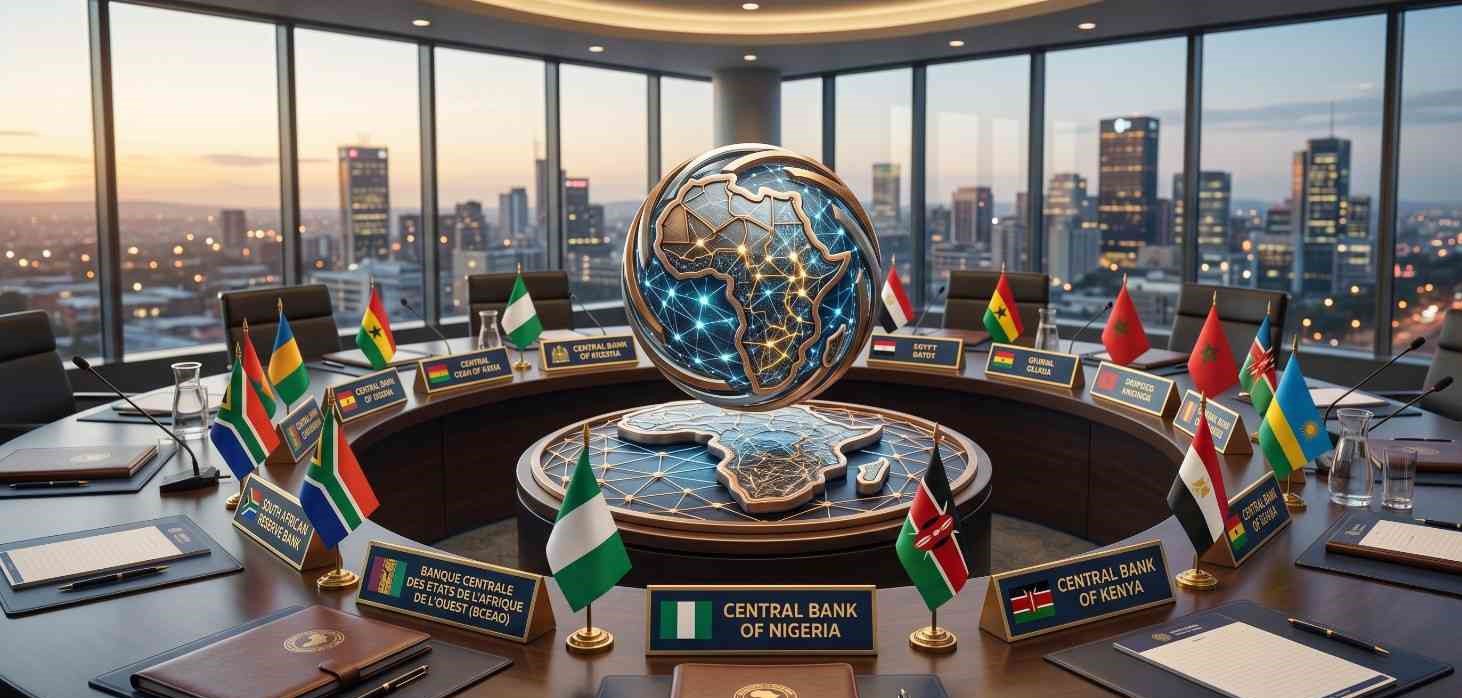
African leaders are sounding a Major alarm over digital finance. Central bank governors from across Africa gathered in Dakar on May 8, 2026. They made a strong, collective appeal for wide-ranging crypto regulations around the world. This meeting was a milestone for digital financial governance on the continent.
African Central Banks Propose a Financial Markets Front.
This historic summit was organized by the third international conference of the Central Bank of West African States, in Senegal. Some of the toughest messages of the day came from officials in Mozambique and São Tomé and Príncipe. They emphasized that decentralized finance is not compatible with the world’s wealthiest economies. So collective action is not only necessary but really important, especially in a trans-border context.
Leaders stressed the importance of strong partnerships between the government and the private sector many times. Coordinated action is needed between central banks, fintech firms and cybersecurity agencies regularly. Furthermore, the conference highlighted the existence of “loopholes” arising from the lack of harmonisation in national laws, which present a dangerous oversight situation.
Such a regional approach would be extremely effective in decreasing those vulnerabilities and save millions of people. Governors also reported that there is a growing problem of cybercrime and financial fraud with the increase of adoption of digital technologies. If there are no shared standards, criminals will simply take advantage of the weakest regulatory points in different jurisdictions.
Development of centralized digital currencies (CBDC) across the continent.
The BIS survey of 2024 showed strong—and growing—trust and momentum among central banks around the world. An impressive 91 percent of the 93 central banks surveyed are actively exploring digital currencies.
Moreover, wholesale CBDC development has come a long way in comparison to retail CBDC development in most regions. Significantly, greater than 1 third of the jurisdictions additionally hastened their efforts particularly because of the development of stablecoins.
Over the past few years, Africa has seen some groundbreaking and historic CBDC projects. The eNaira was launched by the Central Bank of Nigeria in 2021, thus making it the first retail CBDC in Nigeria. Since 2022, Ghana has been testing e-Cedi with a specific intent to enhancing financial inclusion. Also, Morocco is researching the e-dirham to reduce the cost of payments across borders and to stop the use of physical cash.
Global Regulators Race to Set Standards for Digital Assets.
The central bank of South Africa, meanwhile, is working on a wholesale CBDC to modernize its interbank settlement systems. The BCEAO has even formed specific committees for cryptocurrency rules and to study AI in finance. As a result, the continent is no longer a mere observer of global digital finance, but on the forefront of influencing it.
The implications of this discussion go far beyond Africa’s concerns and borders. In developing economies across the globe increasingly and more frequently, stablecoins are being utilized for cross-border payments and remittances. This has put pressure on regulators globally, particularly regulators on every continent, to set rigorous, transparent and enforceable regulations on digital assets.
Central Banks Want one set of rules for digital currencies.
The IMF has issued a detailed handbook of CBDC, and has held several technical assistance missions for central banks in sub-Saharan Africa. The BIS Innovation Hub is also spearheading broad-based research initiatives into tokenization and the design of digital currencies. These institutions understand that one country cannot control a technology that works across all countries.
The BCEAO is preparing to host a large-scale international event dedicated to crypto assets and digital innovations. This high-level event will feature policy makers, financial sector leaders and technology experts from all over the world. It will consider the vast potential and potential threats of fast digitalization to monetary stability.
At the same time, millions of citizens in Africa who don’t have a bank account would have a huge gain from having digital currency systems that are inclusive and responsible. What goes on in the conference room will have a direct impact on the everyday financial lives of ordinary folks tomorrow. The need for harmonized crypto regulations is more urgent and has greater human stakes as digital finance is growing rapidly around the world.

I am a crypto news writer focused on blockchain updates, and digital asset developments. I write clear and simple articles that help readers understand the fast-moving crypto world.


Leave a Reply