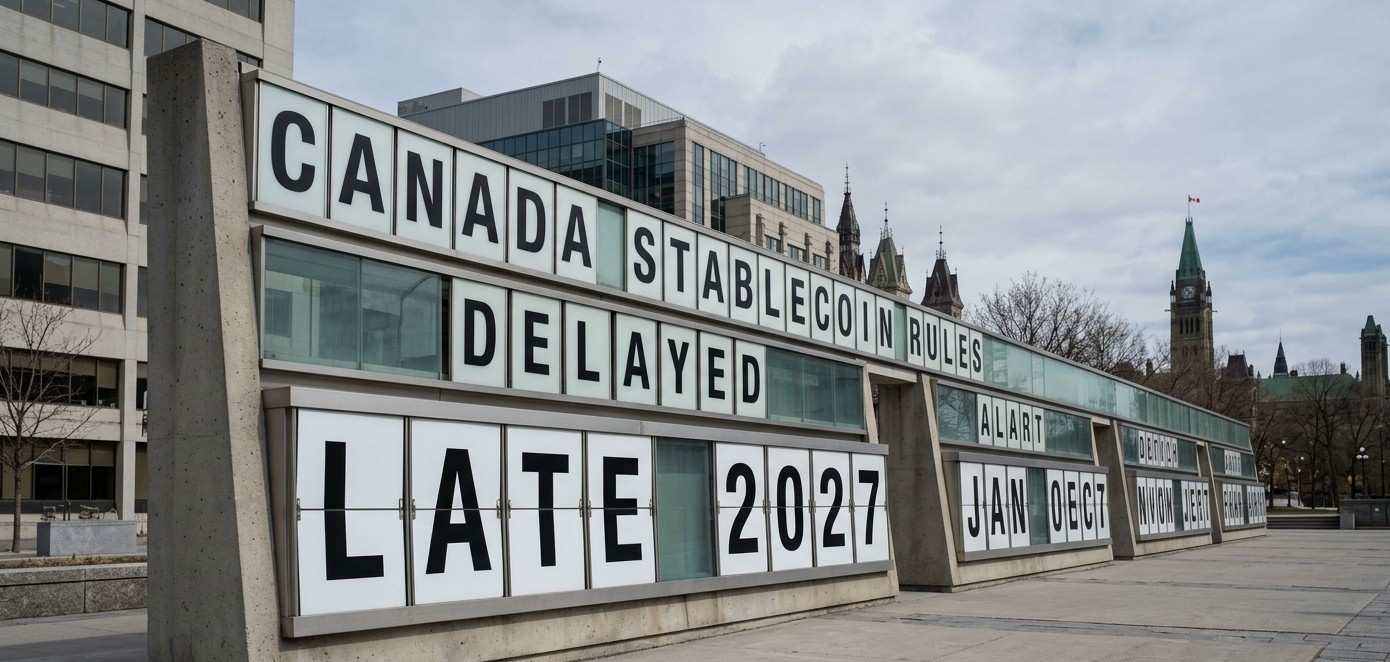
Canada’s stablecoin sector just received an unexpected reality check. The Bank of Canada stated that the regulations for stablecoins could be implemented in the middle or end of 2027. That’s a revision of the earlier expected launch date in early 2027. Uncertainty for compliance planning has now been extended to firms nationwide.The Canada Stablecoin Framework is progressing at a slower pace than anticipated by the industry.
Senior Deputy Governor Carolyn Rogers spoke directly to Canada’s Senate about this. She said the process of developing the regulations has already begun. She said, however, that it’s too early for a 2027 launch. The notice marks a long way till Canada has a stablecoin rulebook that is ready to go.
Challenges and Compliance: Navigating Canada’s Stablecoin Act 2027
This lag time poses actual planning obstacles for issuers and fintech partners. Companies looking to get exposure in the Canadian market have to prepare for registration, reserve standards and governance controls.
In addition, the redemption process, risk management protocols and economics of yield restrictions must be taken into account. In the meantime, the Canadian Stablecoin Act has been passed a month ago and will only come into force in 2027.
Settlement Innovation Moves Ahead Despite Regulatory Gap
Notably, payment networks aren’t waiting for all the rules to come into being. Visa Canada and Wealthsimple announced a pilot of stabling financial obligations with stablecoins. Supported by USD Coin and with seven-day settlement option. As a result, infrastructure of stablecoins is coming to Canada’s financial system ahead of the final stablecoins regulatory framework.
In addition, the pilot is directly developed to meet the treasury and liquidity management requirements. Stablecoin settlement increases flexibility for fintech companies on when obligations are to be fulfilled. Plus, it changes the way treasury functions with the current payment landscape. Regulatory timelines have not stopped the announcement from coming out.
The impact of this delay for Canada and global markets.
The total market cap of stablecoins now exceeds $293 billion.The total value of the global stablecoin market is currently approximately $293 billion. Tether is responsible for around 190 billion dollars out of that total. So, any national framework that Canada puts in place will have a lot of influence on the exchanges and payment providers here. Existing stablecoins on exchanges or listings in Canada will need to be evaluated to determine if they will comply with upcoming requirements relating to reserves and registration.
Important factors to note in this context are the broader market backdrop. The Fear and Greed Index is currently at 38, which is in a place of fear. In recent times, however, there are some signs in the institutional fundraising landscape that capital is still flowing in the face of market uncertainty of regulated crypto infrastructure. The U.S. case adds another layer, in that Washington’s own CLARITY Act is being opposed by politics regarding both rewards for stablecoins and banking issues.
Canada’s Regulatory Roadmap: Balancing Innovation and Stablecoin Oversight
Canada is at a turning point when it comes to digital financial services. The country has a need to be able to foster innovation while at the same time creating a framework to safeguard consumers. Moreover, the longer time frame provides more time for existing operators to prepare, but it also lowers the odds for new operators entering the game. Each month that passes will shape the competition for the entire Canadian crypto market.
The next chapter that Canada is going to be reading is not what they are going to do about stablecoins getting into the financial system.The next chapter that Canada will be reading is not if stablecoins are going to get into the financial system. They already are. The issue is how closely will Canada monitor those rails before they go into full swing operations. This is the country which will be able to show the rest of the world how to strike this balance in a regulated way.

I am a crypto news writer focused on blockchain updates, market trends, and digital asset developments. I write clear and simple articles that help readers understand the fast-moving crypto world.